
Ten chips, five kinds of system
DeepGrid's portfolio by the systems it goes into. Open a chip for what it replaces and its annex sheet; DG32-LITE, the part on first silicon, opens into its diagnostic story and films.
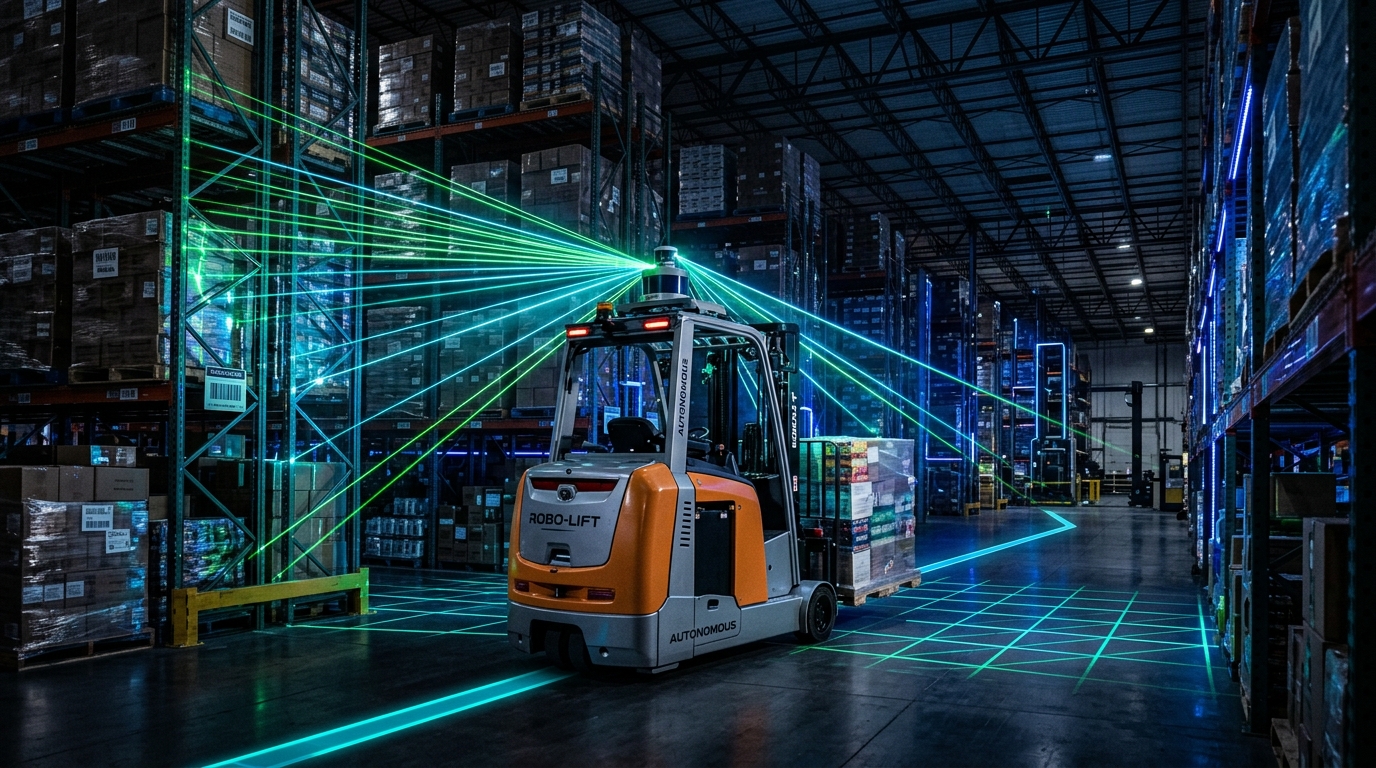
Motors and drives
2 chips · 1 on first silicon
In a motor drive, one chip runs the motor and another can stop it safely. SKU-1 replaces the driver-plus-microcontroller pair in fans, appliances, EV two- and three-wheelers, robots and actuators. SKU-4, DG32-LITE, is the safety processor that supervises a motor and can shut it down.
BLDC motor controller
Native 5–120 V motor drive with hardware PID and CORDIC field-oriented control.
- Runs the motor: fans, appliances, EV two- and three-wheelers, robotics and actuator joints.
- Node
- 130 nm BCD
- Made at
- SkyWater (USA)
- Status
- FPGA-validated
DG32-LITE safety microcontroller
Lockstep safety MCU: dual DGridRiscV at 2-cycle skew, fault latch under 2 cycles.
- Supervises the motor: motor-safety supervision, robot joints, and the field-oriented-control processor beside SKU-1.
- EV battery management, and braking and steering controllers. Braking and steering need CAN-FD, which is on the DG32 roadmap and not on DG32-LITE.
- Flight-critical redundancy feeding the D100 roadmap.
- Node
- 130 nm CMOS
- Made at
- SkyWater (USA)
- Status
- First silicon
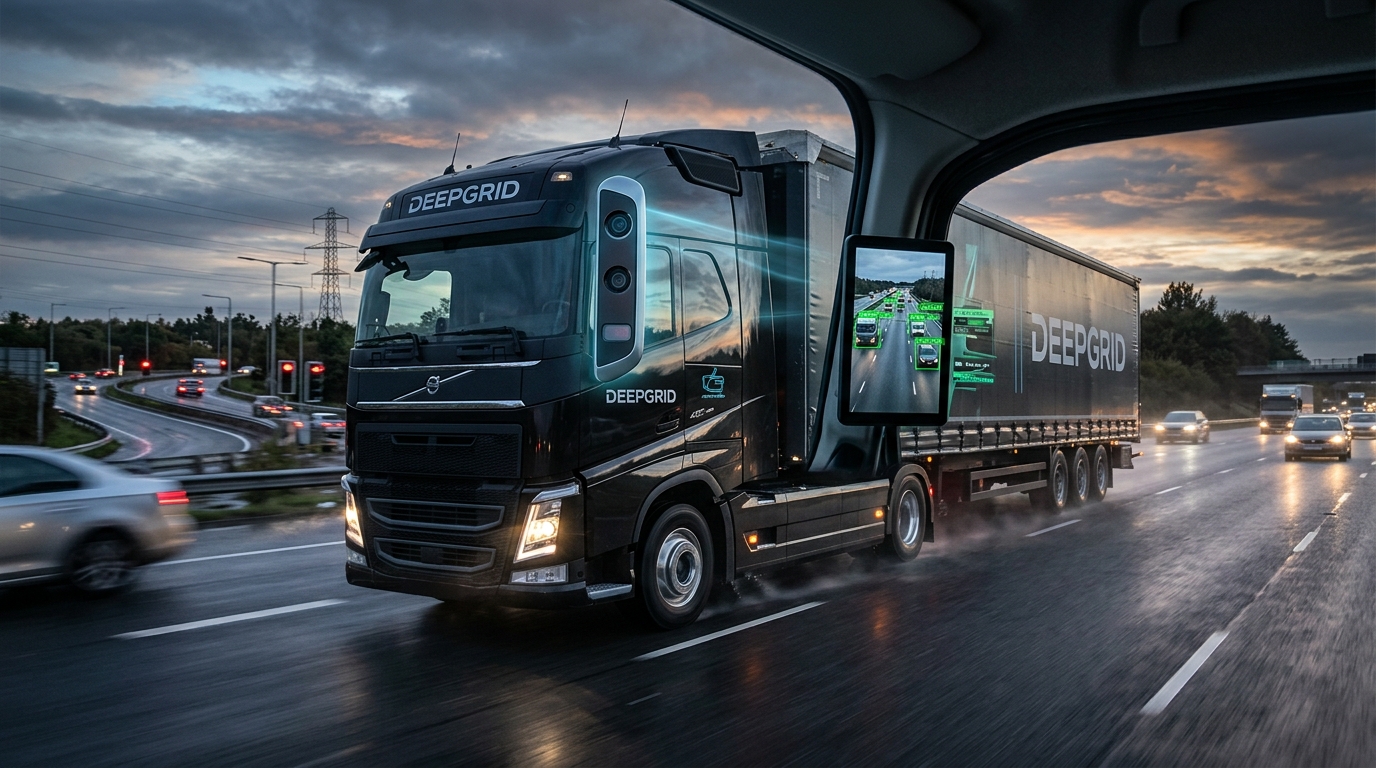
Vehicles
3 chips
In a vehicle, the chips sit at the edges: the battery, the brakes, the radar, the bus and the wiring zones. The central computer of a software-defined vehicle is a sub-10 nm problem and is explicitly not claimed. What mature nodes own is everything around it.
RS-485 and CAN-FD transceiver
RS-485 and CAN-FD with ±15 kV HBM ESD, replacing discontinued parts.
- The CAN-FD and RS-485 link at every node on the vehicle bus.
- Ships with every node on every industrial bus, including harsh wiring harnesses.
- Node
- 130 nm HV
- Made at
- SkyWater (USA)
- Status
- Design only
77 GHz 4D radar
77 GHz 4D MIMO radar front end, fabricated outside US export control.
- DeepGrid’s own truck mirror-tower radar, and automotive emergency braking.
- Defence perimeter and counter-drone radar.
- Node
- 0.13 µm SiGe BiCMOS
- Made at
- IHP (Germany)
- Status
- Design only
Zonal gateway
Zonal gateway: 16 smart e-fuses and four-port Gigabit TSN, replacing relay boxes.
- The zonal layer of a software-defined vehicle: gateway, smart inputs and outputs, and the safety and security edge.
- Node
- 130 nm + 180 nm
- Made at
- SkyWater (USA)
- Status
- Design only
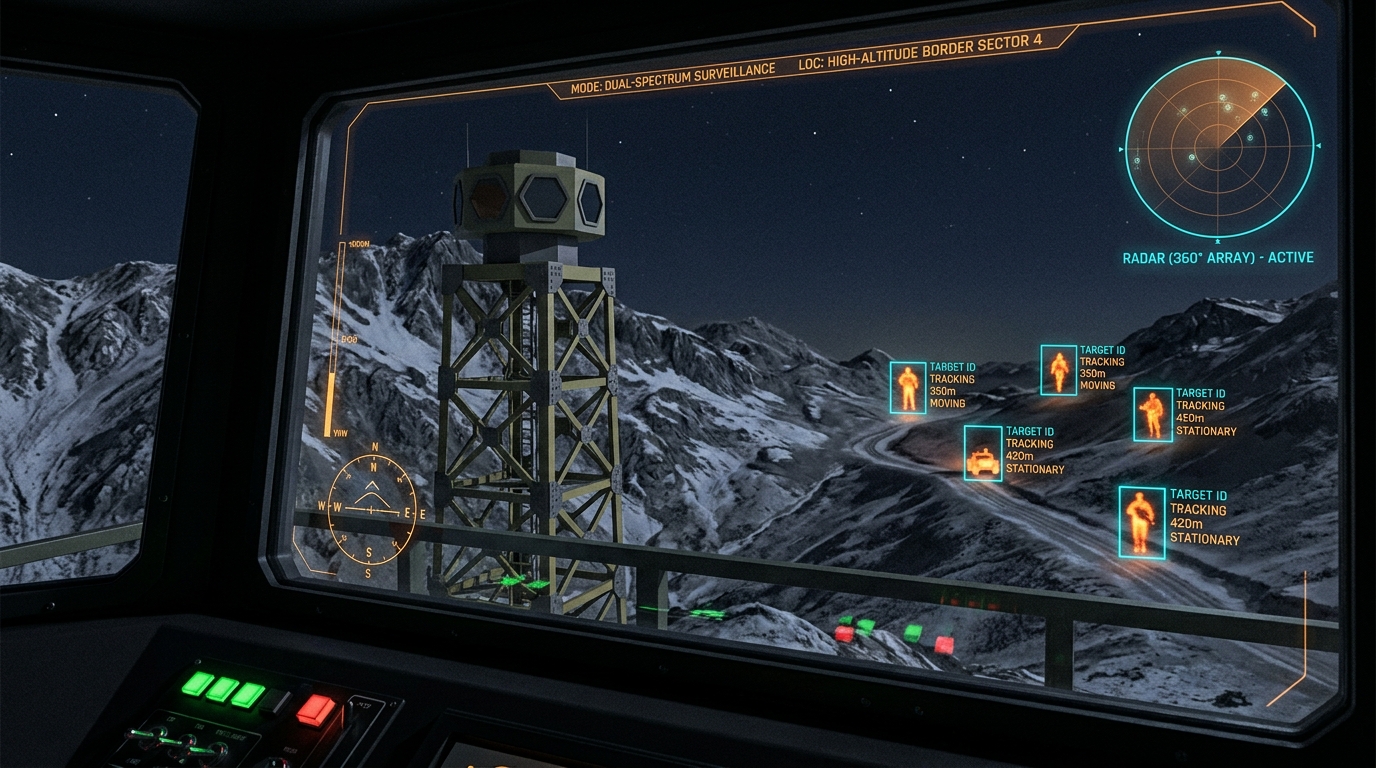
Defence, avionics and drones
3 chips
Defence, avionics and drones need screened parts, and a failsafe that does not depend on software. The drone SoC keeps a hardware failsafe island wired straight to the motor controllers, so a crashed or jammed mission stack can still land the airframe.
High-reliability power IC
Sequenced avionics rails on a 28 V bus, DO-160G and NSG-5962.
- The sequenced 28 V power rails of avionics and military-vehicle electronics.
- Node
- 180 nm BCD
- Made at
- SCL Mohali (India)
- Status
- Design only
Rugged display driver
Rugged cockpit display driver, 0–12 V column amplifiers with compensated gamma.
- Rugged cockpit displays.
- Industrial control panels, rail passenger displays and automotive instrument clusters.
- Node
- 130 nm HV CMOS
- Made at
- SkyWater (USA)
- Status
- Design only
D100 drone SoC
Tactical drone SoC with an independent hardware failsafe island wired to the ESCs.
- Flight control and visual-inertial navigation for drones, with a hardware failsafe to the speed controllers. Navigation is geometric, so it survives GPS jamming.
- Node
- 130 nm + 28 nm, multi-die SiP
- Made at
- Separate track
- Status
- FPGA-validated
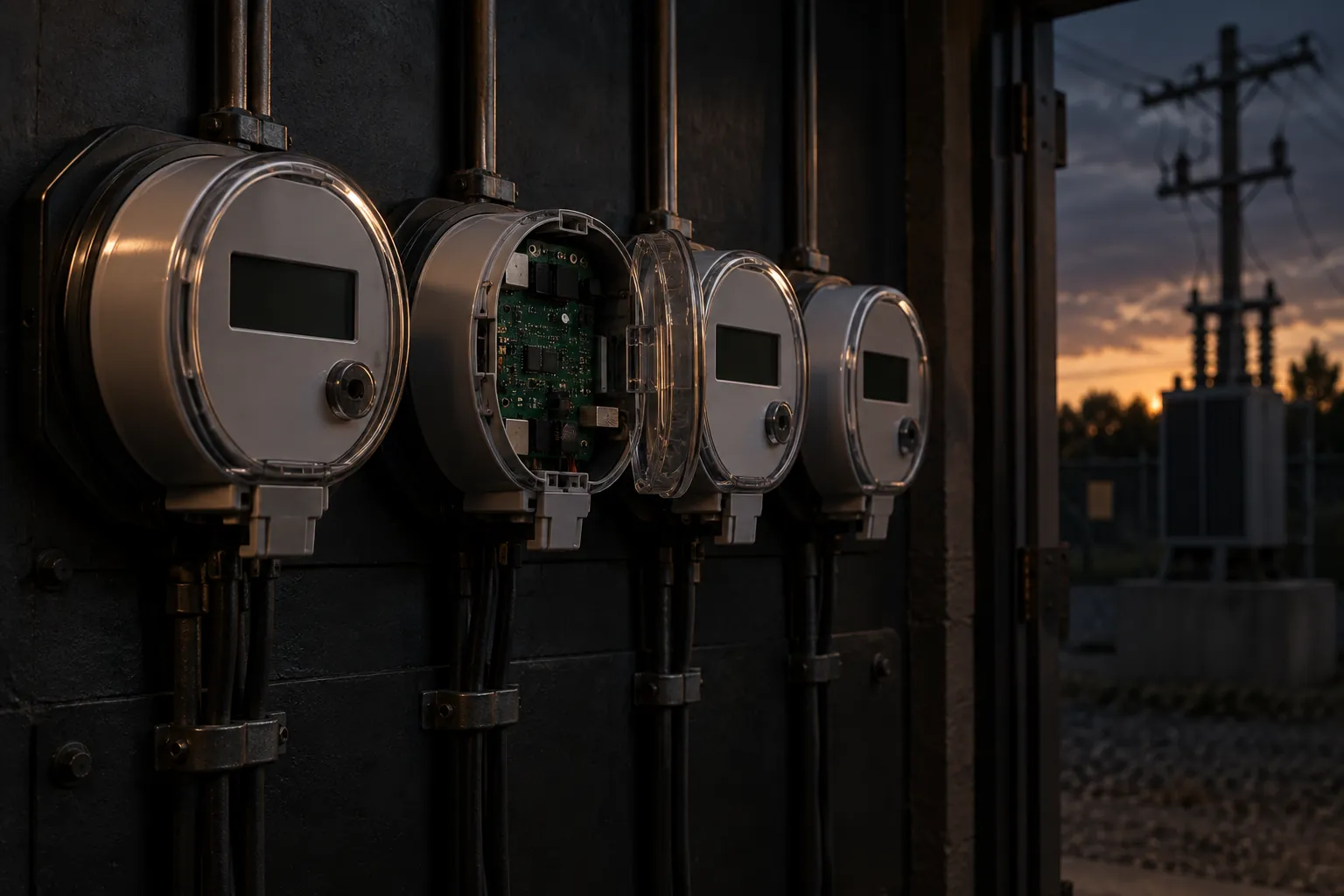
Grid and metering
1 chip
For the national smart-meter rollout, one chip measures the power and records tampering. Tamper detection is a tender requirement, so the chip keeps an always-on clock domain that logs a magnet or an opened case while mains power is cut.
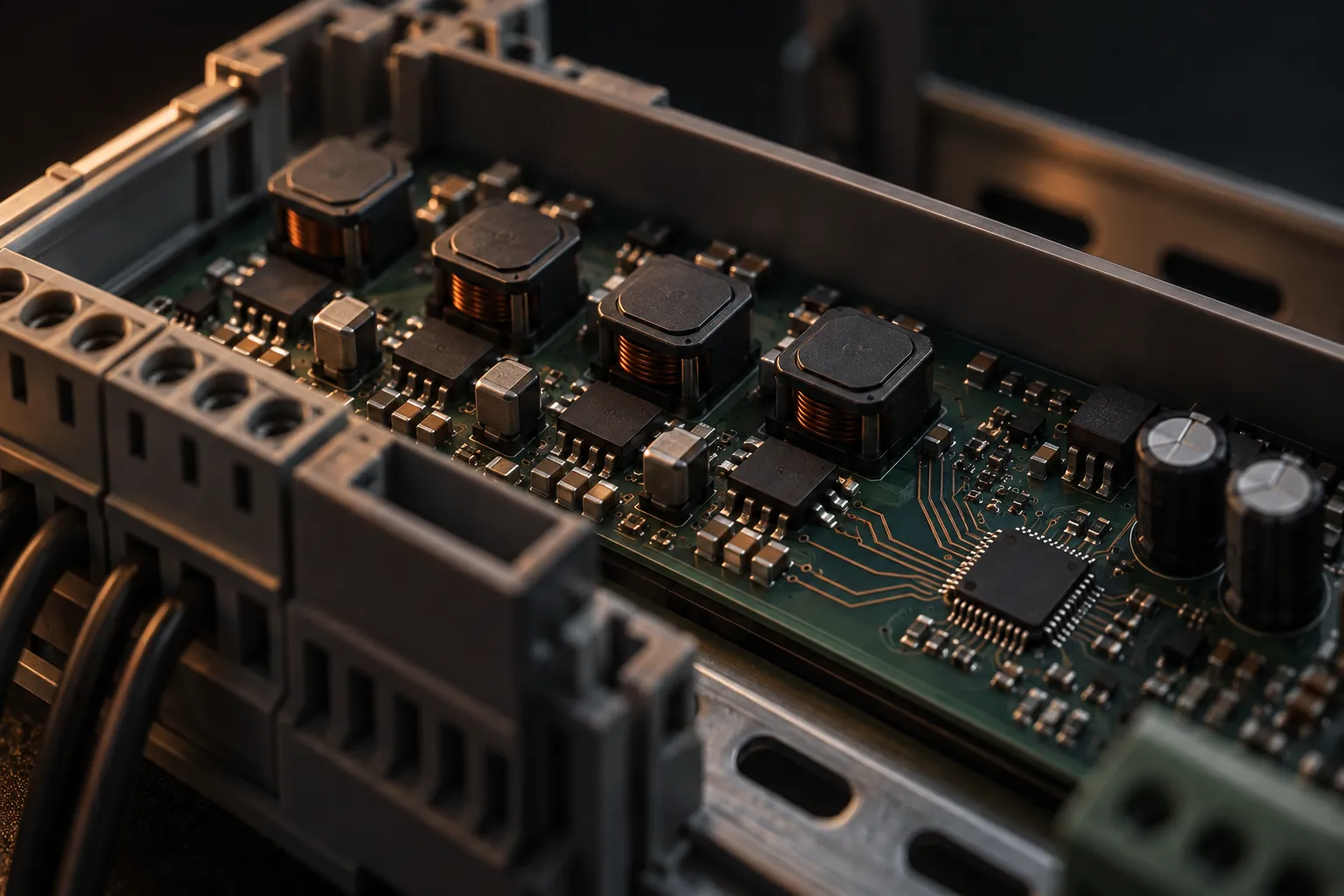
On nearly every board
1 chip
Some parts go on nearly every circuit board, which is where the volume is. A supervisor watches a board’s power rails and a transceiver connects it to its bus. Neither is glamorous, and both ship with almost everything.
Where each chip goes is from the SKU Architecture Compendium (Technical Annex v3). Only DG32-LITE is on first silicon; the rest are architecture sheets with their wafer runs planned. Concept renders show where a product is used, not the product.
Motors and drives, in depth
DG32-LITE is a safety microcontroller for motors and batteries, and it can watch the machine it controls.
In DeepGrid’s portfolio it is SKU-4, the safety MCU. It is built to take the socket a Microchip or Renesas functional-safety microcontroller holds today: the independent processor in a battery pack, a motor drive, a braking or steering controller, a robot joint or a drone’s redundant flight path, whose job is to catch a fault and shut the system down.
Because it already sits beside the motor, it can do a second job in its spare cycles: watch that motor for faults before they trip anything. A wearing bearing, a broken rotor bar, a pump running dry, a winding getting hot. That is what the thirty tasks on this page are, and every one fits on its single 50 MHz core with no accelerator and no second chip.
24 of the 30 run faster than 1 kHz. The slowest takes 10.3 ms and the largest needs 20 KB. The limit that actually binds is the sensor on the motor, not the chip, and this page says where.
SKU Architecture Compendium, Technical Annex v3, sheet 5 · DG32-AI use-case playbook, pages 1 and 3
It goes into five places, and each one has its own faults worth watching.
The sockets below are DeepGrid’s own, from the portfolio annex. Beside each are the tasks from this page that fit it. That pairing is ours: the annex names the sockets and the playbook costs the tasks, but neither document matches them up.
SKU Architecture Compendium, Technical Annex v3, sheet 5: “replaces Microchip/Renesas functional-safety MCU sockets”
EV battery management and motor-safety supervision
The independent processor that watches a battery pack or a drive and can shut it down. Lockstep cores and the FAULT_N pin are the supervision; the diagnostics add warning before a trip.
Braking and steering controllers
Drives where a wrong output is a safety event, so a silent CPU fault has to trip in hardware.
These need the CAN-FD vehicle bus, which is on the roadmap and not on DG32-LITE.
Robot joints
One controller per joint, running the motor loop and watching the gearbox and load behind it.
The motor-control processor beside a BLDC driver
The field-oriented-control processor next to SKU-1, DeepGrid’s BLDC motor controller for fans, appliances, EV two- and three-wheelers, robotics and actuator joints.
Flight-critical redundancy for the D100 drone programme
A second, independent safety processor beside the flight computer. DG32-LITE drives drone speed controllers directly through its four hardware DShot channels.
The annex describes the lockstep safety MCU as on an ISO 26262 ASIL-D path. That is a direction, not a certification: no functional-safety certification is claimed for DG32.
In a motor drive, control comes first. Diagnostics has to fit around it.
A drive switches its power transistors thousands of times a second, and one wrong switching edge can short the bridge. So anything else the processor does must never delay the control loop, and must never be the thing that decides to shut the motor down.
DG32 keeps those two jobs apart. A lockstepped pair of cores and a hardware fault pin hold the trip limits. The diagnostic models on this page only advise: they raise a score or a class, and the deterministic monitor keeps the final say.
Playbook, page 12 · DG32-LITE architecture film, slide 3
“Why build it this way? A motor drive switches power transistors thousands of times a second. If the CPU silently computes a wrong value, it writes a wrong PWM edge, and a wrong edge can short a bridge leg. Entry-level motor MCUs catch faults with watchdogs and periodic software self-test. Hardware lockstep has lived in automotive parts such as AURIX, S32K and Hercules.”
DG32-LITE architecture film · slide 3 · 1:01–1:32Control costs a fixed amount of hardware time, so what is left is a known budget.
The expensive steps of motor control run in dedicated hardware, so one loop costs about 300 cycles at any loop rate. The diagnostics live in what remains, and the playbook sizes every task against four numbers.
- Scalar throughput
- 12.5 MMAC/s
- Model budget
- 16.5 KB
- Free cycles
- 82 %
- Hardware help
- CORDIC
RV32IM at 50 MHz, int8
29.5 KB with the runtime moved to mask ROM
with a 10 kHz field-oriented control loop running
sin, cos, atan2 and magnitude, already in the loop
The film and the playbook count different things. The film’s 4,700 cycles at 10 kHz are what is left after the hardware part of one loop; the playbook’s 82 % is what is left for diagnostics with the whole control loop running. The budget for one inference is 12.5 million multiply-accumulates a second divided by the rate: 12.5 thousand at 1 kHz.
Playbook, page 3 · DG32-LITE architecture film, slides 9 and 10
“Here is what one loop costs. The current sample takes one hundred seventy-seven cycles. Each CORDIC operation takes fifty-three to fifty-eight. The regulators cost about eight cycles per instruction. Together the hardware part is about three hundred cycles, and it is the same at every loop rate. At twenty kilohertz, that is twelve percent of the period. So the question becomes how much firmware fits. At ten kilohertz there are about forty-seven hundred cycles left: enough for a full current and speed loop with an observer. At twenty kilohertz, twenty-two hundred, enough for field-weakening. At fifty kilohertz, seven hundred, an inner current loop only. The simulated ceiling is about one hundred kilohertz.”
DG32-LITE architecture film · slide 9 · 4:00–4:51On this core, small classical models beat neural networks, and the signal matters more than the model.
Without a multiply array, comparisons and table lookups are the cheap operations. A 100-tree random forest at depth 8 is about 800 comparisons and no multiplies. That is not a compromise: on the CWRU bearing benchmark a random forest over five features reaches 95.6 %, and a review of 42 papers finds support-vector machines at 95 to 100 % against deep methods at 97 to 100 %, statistically the same.
What moves accuracy is the signal. In a twelve-feature ranking study, features taken at the known fault frequency outscored raw statistics four to five times (225.9 against 51.8). So the cycles go to band selection and envelope demodulation first, and a larger model last.
Playbook, pages 4 to 6
| Model | What it does | Cycles | Inference | Tasks |
|---|---|---|---|---|
| LDA | Primary classifier | 128 | 0.00 ms | 5 |
| Random forest, 100×d8 | Primary classifier | 3,200 | 0.06 ms | 4 |
| Logistic regression | Primary classifier | 128 | 0.00 ms | 3 |
| Gradient boosting, 200×d4 | Primary classifier | 3,200 | 0.06 ms | 2 |
| Mahalanobis score | Anomaly score, single scalar | 4,096 | 0.08 ms | 2 |
| Extended Kalman filter | Observer: sensorless FOC, thermal | 2,400 | 0.05 ms | 2 |
| MLP 32-16-8-4 | Nonlinear classifier or regressor | 2,688 | 0.05 ms | 2 |
| Isolation forest | Unlabelled anomaly detection | 3,200 | 0.06 ms | 1 |
| One-class SVM | Anomaly detection with a decision boundary | 12,800 | 0.26 ms | 1 |
| k-NN, 200 prototypes | Field-adaptable classifier | 25,600 | 0.51 ms | 1 |
| Nearest centroid | On-device baselining, no backward pass | 1,024 | 0.02 ms | 1 |
| Gaussian mixture | Regime identification | 2,048 | 0.04 ms | 1 |
| HMM, 8 state | Sequence and state tracking | 3,072 | 0.06 ms | 1 |
| MLP autoencoder | Unsupervised drift detection | 22,016 | 0.44 ms | 1 |
| MLP 128-64-32-8 | Regression at the dense-network ceiling | 41,984 | 0.84 ms | 1 |
| GRU, 16 units | Short sequence modelling | 147,456 | 2.95 ms | 1 |
| 1D-CNN 8/16/32 | Raw-waveform classification | 512,000 | 10.24 ms | 1 |
8 Rotating machinery
Bearings are the most common motor failure, and an accelerometer catches them.
Bearings account for 44 % of motor failures and are the weakest fault class for current-only sensing, so this family reads vibration. Features taken at the bearing’s own fault frequencies outrank raw statistics four to five times, so the classifier behind them stays small.
ISO 20816 severity zones · ISO 13373 vibration monitoring
Playbook, page 7 and page 11
Bearing fault classification
Inner race, outer race, ball and cage defects
Goes into: BLDC motor control
- Signal
- Accelerometer, ≥5 kHz bandwidth · envelope + FFT-256 + moments
- Runs
- Random forest, 100×d8
- Cost
- 0.92 ms890 Hz below 1 kHz20 KB
Bearing severity trending
ISO 20816 zone A/B/C/D from broadband RMS velocity
- Signal
- Accelerometer · decimate + RMS
- Runs
- LDA
- Cost
- 0.14 ms>1 kHz0.7 KB
- Signal
- Accelerometer, order-tracked on encoder · envelope + FFT-512 + moments
- Runs
- Random forest, 100×d8
- Cost
- 1.69 ms480 Hz below 1 kHz20 KB
Pump cavitation and dry-run
Separates cavitation, dry running and normal load
Goes into: BLDC motor control
- Signal
- Phase current + pressure over SPI · FFT-256 + moments
- Runs
- Gradient boosting, 200×d4
- Cost
- 0.82 ms>1 kHz12 KB
- Signal
- Accelerometer + tachometer · FFT-256 + moments
- Runs
- LDA
- Cost
- 0.76 ms>1 kHz0.7 KB
- Signal
- Accelerometer + crank reference · envelope + FFT-256
- Runs
- Random forest, 100×d8
- Cost
- 0.78 ms>1 kHz20 KB
Belt slip and misalignment
Dual-encoder differential, or vibration harmonic ratio
Goes into: BLDC motor control
- Signal
- Dual encoder or accelerometer · FFT-256
- Runs
- Logistic regression
- Cost
- 0.62 ms>1 kHz0.7 KB
Shaft misalignment and looseness
1×, 2×, 3× harmonic pattern
- Signal
- Accelerometer · FFT-256 + moments
- Runs
- Random forest, 100×d8
- Cost
- 0.82 ms>1 kHz20 KB
8 Electrical and power
The phase current the drive already samples carries rotor and stator faults.
Motor current signature analysis looks for sidebands around the supply frequency. The FFT that would resolve them is 8 MB, so the playbook evaluates Goertzel filters at only the predicted sideband frequencies instead.
ISO 20958 motor current signature analysis
Playbook, page 8 and page 11
- Signal
- Phase current, ≥12-bit with notch · Goertzel
- Runs
- LDA
- Cost
- 0.13 ms>1 kHz0.7 KB
Air-gap eccentricity
f₁ ± m·f_r sidebands from mixed eccentricity
- Signal
- Phase current, ≥12-bit · Goertzel
- Runs
- LDA
- Cost
- 0.13 ms>1 kHz0.7 KB
Stator inter-turn short
Negative-sequence current index against baseline
Goes into: Battery and motor supervision
- Signal
- Three-phase current + voltage · Park + RMS
- Runs
- Mahalanobis score
- Cost
- 0.14 ms>1 kHz2 KB
Phase loss and current unbalance
Sequence-component imbalance
Goes into: Battery and motor supervision
- Signal
- Phase current, already sampled · Park
- Runs
- Logistic regression
- Cost
- <0.01 ms>1 kHz0.7 KB
Arc-fault and partial discharge
Early insulation breakdown signature
- Signal
- HF current transformer + envelope · envelope + FFT-256
- Runs
- One-class SVM
- Cost
- 0.97 ms840 Hz below 1 kHz6.9 KB
Power-quality events
Sag, swell, harmonic distortion, flicker
- Signal
- Line voltage and current, 64 cycles · Goertzel
- Runs
- LDA
- Cost
- 0.13 ms>1 kHz0.7 KB
- Signal
- Slow V / I / T sequence · moments
- Runs
- MLP 32-16-8-4
- Cost
- 0.19 ms>1 kHz0.7 KB
Winding thermal estimation
Virtual temperature sensor from current history
Goes into: Battery and motor supervision
- Signal
- Current history + ambient · RMS
- Runs
- Extended Kalman filter
- Cost
- 0.11 ms>1 kHz2 KB
8 Control, motion and sensing
Most of these run on the sensors the drive already has.
Sensorless observation, plausibility checking, regime identification, anomaly scoring and duty tracking depend on relative change rather than small-signal resolution, so they need no added parts.
Playbook, page 9
Sensorless rotor position
EKF flux observer, removes the position sensor
Goes into: Braking and steering
- Signal
- Phase current, CORDIC- assisted · Park
- Runs
- Extended Kalman filter
- Cost
- 0.05 ms>1 kHz2 KB
Learned sensor plausibility
Encoder vs Hall vs back-EMF consistency
Goes into: Braking and steering, Drone flight redundancy
- Signal
- Existing peripherals, no added BOM · Park
- Runs
- Nearest centroid
- Cost
- 0.02 ms>1 kHz1 KB
- Signal
- Encoder, Hall, current, temperature · RMS
- Runs
- Gaussian mixture
- Cost
- 0.10 ms>1 kHz2 KB
- Signal
- Existing peripherals
- Runs
- HMM, 8 state
- Cost
- 0.06 ms>1 kHz2 KB
- Signal
- Encoder + current · Park
- Runs
- MLP 32-16-8-4
- Cost
- 0.06 ms>1 kHz0.7 KB
Kickback and stall detection
Sudden load transient classification
Goes into: Braking and steering, Robot joints, Drone flight redundancy
- Signal
- Phase current · RMS
- Runs
- Gradient boosting, 200×d4
- Cost
- 0.12 ms>1 kHz12 KB
Load estimation and torque ripple
Torque ripple harmonics from current
Goes into: Braking and steering
- Signal
- Phase current · FFT-256
- Runs
- Logistic regression
- Cost
- 0.62 ms>1 kHz0.7 KB
Multivariate anomaly scoring
Single scalar novelty score, raised as an IRQ
Goes into: Battery and motor supervision, Drone flight redundancy
- Signal
- Any fused sensor set · moments
- Runs
- Mahalanobis score
- Cost
- 0.22 ms>1 kHz2 KB
6 Slower-rate and sequence
Trend and forecasting tasks read hours of history, so they can run slower.
Remaining-useful-life regression works from 64 hourly feature snapshots. Three of the six tasks that run below 1 kHz are in this family.
Playbook, page 10
Remaining-useful-life regression
Trend extrapolation over long feature history
- Signal
- 64 hourly feature snapshots
- Runs
- MLP 128-64-32-8
- Cost
- 0.84 ms970 Hz below 1 kHz10.5 KB
Unsupervised drift detection
Reconstruction error against learned healthy manifold
- Signal
- Any fused sensor set · moments
- Runs
- MLP autoencoder
- Cost
- 0.58 ms>1 kHz5.5 KB
Short-horizon forecasting
Predicts a slow process variable a few steps ahead
- Signal
- Any slow scalar, 64-step history
- Runs
- GRU, 16 units
- Cost
- 2.95 ms270 Hz below 1 kHz1.6 KB
Raw-waveform fault classification
End-to-end from the sampled window, no hand features
- Signal
- Accelerometer or current · decimate
- Runs
- 1D-CNN 8/16/32
- Cost
- 10.32 ms79 Hz below 1 kHz14 KB
Novelty detection without labels
Isolation-forest outlier score
- Signal
- Any fused sensor set · moments
- Runs
- Isolation forest
- Cost
- 0.20 ms>1 kHz8 KB
Per-machine baselining
On-device prototype update, no backward pass
- Signal
- Any fused sensor set · moments
- Runs
- k-NN, 200 prototypes
- Cost
- 0.65 ms>1 kHz6.4 KB
Compute is not the limit. The sensors are.
Rotor-bar and eccentricity faults show up as sidebands 40 to 60 dB below the supply frequency. An 8-bit converter resolves 42 dB, so the whole diagnostic range sits at or under its noise floor. Broken rotor bar, air-gap eccentricity and stator inter-turn detection need a 12 to 16-bit converter, or analog suppression and gain ahead of it. The sidebands are also close together, so they need 30 to 100 seconds of record at steady load.
- Add one accelerometerThe highest-value addition, because bearings are 44 % of motor failures. It needs at least 5 kHz of usable bandwidth, which many low-cost MEMS parts lack, and a stud mount rather than a magnet or adhesive.
- Add three-phase current and voltageUnlocks stator inter-turn detection and instantaneous power analysis. It needs a multi-channel converter; the part has one differential channel today.
- Works today, unchangedSensorless observation, plausibility checking, regime identification, anomaly scoring and duty tracking run on the sensing already present, because they read relative change.
Playbook, page 11 (ISO 13373-1, 13373-2, 20958) · DG32-LITE architecture film, slide 14
“Against the STM32G0, the entry-level incumbent, the comparison is honest. DG32 leads on hardware lockstep, native DShot, hardware CORDIC and the on-chip AI variant, with an open RISC-V core. The G0 leads clearly on its twelve-bit multi-channel ADC, embedded flash, USB and CAN-FD, and on production maturity.”
DG32-LITE architecture film · slide 14 · 6:13–6:41DG32-2DOM adds an attention engine, on its own clock, for the models the scalar core runs slowly.
None of the thirty tasks needs it. An attention kernel at 64/32/32 is 0.26 million multiply-accumulates, about 21 ms in software on DG32-LITE: it fits, but slowly. DG32-2DOM keeps the same lockstep controller and adds an INT8 engine on a separate clock, behind bridges, so it can never hold up motor control.
So the line is simple. DG32-LITE covers the thirty tasks on this page. DG32-2DOM is for the next class of model, the kind an entry-level motor MCU can only run in software.
Playbook, page 3 · DG32-2DOM architecture film, slides 1 and 12
“DG32-2DOM is the attention variant of Deepgrid Semi's DG32-LITE motor-control chip. It keeps the dual-core lockstep controller and adds an INT8 attention engine on its own clock, so a drive can watch its own motor for faults. The design is complete and in physical trials. Every figure here is a post-route, simulated or analytic value, and each one is labelled.”
DG32-2DOM architecture film · slide 1 · 0:00–0:30“What is it for? Catching a wearing bearing, or a drive that starts behaving oddly, without an extra processor on the board, because the motor controller watches its own motor. The STM32G0 can only run that kind of model in software, so a hardware engine sets DG32-2DOM apart. On the roadmap it runs alongside DG32-LITE's first silicon, with its design finished and undergoing physical trials.”
DG32-2DOM architecture film · slide 12 · 5:17–5:49Every figure here is derived, not measured, and the classifier never holds the trip.
Every latency, memory figure and rate on this page is calculated: feature-extraction cycles plus model cycles, at 4 cycles per int8 multiply-accumulate, against 82 % of a 50 MHz core. That constant is back-solved from the design documents. No workload has been compiled for or measured on DG32-LITE, which has not completed place-and-route.
Accuracy needs the same care. Forty of forty-one reviewed bearing-benchmark studies used splits open to data leakage; on a leakage-free split one classifier fell from 85.8 % to 69.5 %. Expect 65 to 80 % on bearings the model has never seen. That is why the classifier advises and the lockstep monitor holds the trip.
Playbook, page 12 · DG32-LITE architecture film, slides 6 and 16
“This is the safety core. MAIN runs the application. CHECKER runs the same instructions two cycles later, on the same inputs, and the comparator checks every committed store. On a mismatch, the first cause is latched and FAULT_N goes low. Route that pin to the gate-driver enable, and the bridge turns off in hardware, without waiting for firmware.”
DG32-LITE architecture film · slide 6 · 2:33–2:59“Three ideas to hold on to. The protection is built into the processor itself, not bolted on in software. The costly parts of motor control are dedicated hardware, so the price of one loop is fixed and known in advance. And the weaknesses are named, with fixes scheduled. None of this has yet been measured on silicon, and no functional-safety certification is claimed; bring-up is where the numbers become real.”
DG32-LITE architecture film · slide 16 · 7:14–7:43Bring a failure mode and a sample rate. We will tell you whether it fits.
If your machine is not among these thirty, the method is the same: the fault, the sensor that sees it, the rate it needs, and the model that fits the budget.
Pre-silicon. Figures are design values verified in simulation and static timing, not measurements on fabricated parts, unless marked otherwise.